


Healing Trauma With EMDR Therapy
EMDR (Eye Movement Desensitization and Reprocessing) is a proven, evidence-based therapy designed to help you process difficult memories, reduce anxiety, and feel more emotionally balanced.
In EMDR sessions, you’ll be guided safely and at your own pace to reprocess challenging experiences and reconnect with a sense of calm and resilience.
What is EMDR?
EMDR (Eye Movement Desensitization and Reprocessing) is an evidence-based therapy that helps people process distressing memories, reduce anxiety, and improve emotional regulation.
By guiding clients through specific bilateral stimulation techniques, EMDR supports the brain in reprocessing difficult experiences safely, allowing individuals to feel calmer, more grounded, and better able to cope with life’s challenges.
Key Benefits Include:
• Relief from trauma and upsetting memories
• Reduction in anxiety, stress, and emotional triggers
• Improved confidence and emotional resilience
• Greater sense of control over past experiences

How EMDR Works
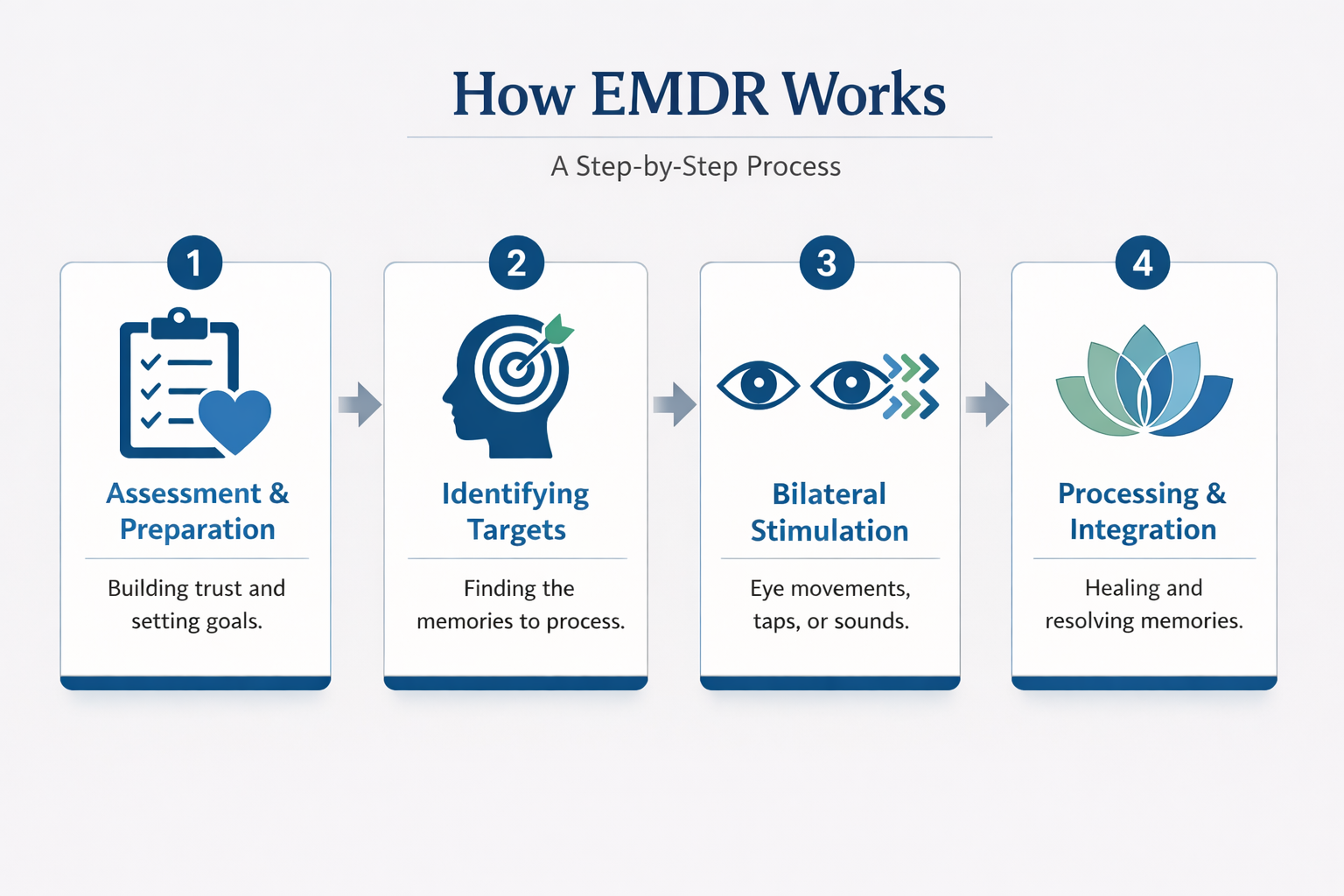
EMDR follows a structured, evidence-based process. Here’s a simple overview of how each session works:
How I Support You
-

Who Can Benefit?
Adults experiencing trauma or PTSD – EMDR can help process distressing memories safely.
Individuals struggling with anxiety or stress – Reduce emotional triggers and feel more grounded.
People navigating difficult life transitions – Gain clarity, resilience, and emotional balance.
Those affected by grief or loss – Process intense emotions and find a sense of steadiness.
Anyone seeking evidence-based emotional healing – Suitable for clients wanting a structured, effective therapy approach. -

What to Expect in a Session
Safe, paced sessions tailored to you – Each EMDR session is guided by a trained therapist, helping you process memories gradually while staying grounded and supported.
Structured but flexible process – Sessions follow EMDR phases, but your comfort and readiness guide the pace.
Focus on specific memories or challenges – You’ll work on experiences that most impact your emotions, helping reduce distress over time.
Use of bilateral stimulation – Eye movements, taps, or sounds help your brain reprocess memories in a safe, evidence-based way.
Gradual emotional relief and integration – Sessions aim to help you feel calmer, more resilient, and better able to manage triggers between sessions.
Common Questions About EMDR Therapy
You may have questions about what counselling involves or whether it’s the right fit for you. Here are some common questions I hear from individuals about EMDR.
-
EMDR stands for Eye Movement Desensitization and Reprocessing, a structured, evidence-based therapy that helps the brain process distressing memories and reduce emotional distress.
-
Yes. EMDR is conducted by trained professionals in a safe, controlled environment, and the pace is guided by your comfort. It’s widely used for trauma, anxiety, and related challenges.
-
EMDR uses bilateral stimulation (eye movements, taps, or sounds) to help the brain reprocess difficult experiences. This allows memories to be stored in a less distressing way, improving emotional regulation.
-
Sessions begin with assessment and preparation, followed by focusing on specific memories or challenges while using bilateral stimulation. The therapist supports you throughout, helping you process emotions safely.
-
Results vary by individual and the complexity of your experiences. Some people notice improvement in a few sessions, while others may need longer-term work to achieve lasting relief.
-
EMDR is effective for many people with trauma, anxiety, stress, or life challenges, but each person responds differently. A therapist will assess whether EMDR is appropriate for your needs.
-
Yes. EMDR is used for a variety of challenges, including generalized anxiety, stress, grief, and navigating life transitions, helping you process difficult emotions safely.
-
No referral is typically needed. You can contact a trained EMDR therapist directly to schedule a consultation and determine if EMDR is right for you.
-
EMDR may bring up memories or emotions, but sessions are guided carefully. The therapist helps you stay grounded and supported while processing experiences.
-
While talk therapy focuses on discussing experiences, EMDR uses specific bilateral stimulation techniques to help the brain reprocess memories, often resulting in faster relief from distressing emotions.
-
As a Registered Clinical Counsellor (RCC), many extended health plans provide coverage. I recommend checking with your provider to confirm your specific benefits.
Signs EMDR Might Be Right for You
You feel stuck in past experiences – Memories or events keep resurfacing, affecting your daily life.
You experience anxiety, stress, or emotional triggers – Certain situations bring intense or overwhelming reactions.
You’ve experienced trauma or PTSD – Distressing memories or flashbacks interfere with your sense of safety.
You’re navigating life transitions or grief – Big changes, loss, or unexpected challenges feel hard to manage.
You want evidence-based emotional healing – You’re looking for a structured, professional approach to process difficult emotions.
Take the Next Step Toward Emotional Balance and Healing
Sessions are available virtually or in person in Coquitlam, whichever works best for you.